59 Phenix Ave Cranston, RI 02920

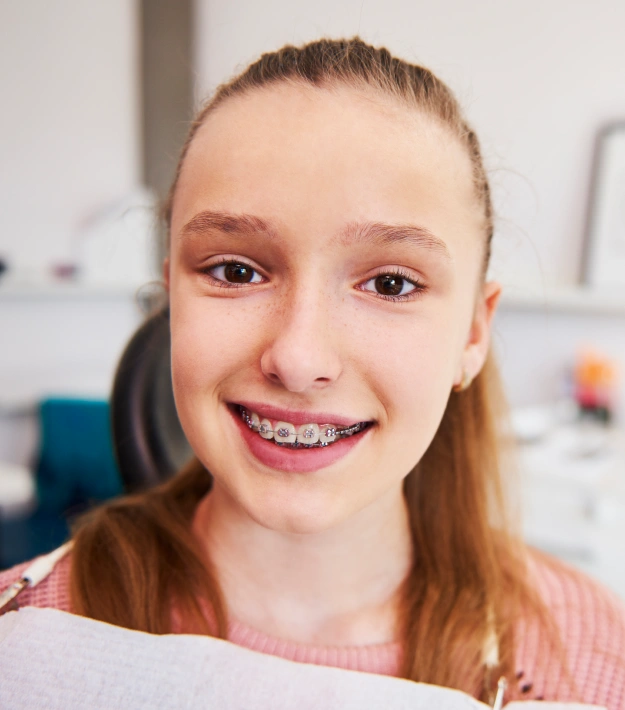
What Are Self-Ligating Braces
Self-ligating braces are a modern evolution of traditional fixed braces — using the same fundamental mechanics of brackets and archwires, but with one important difference: instead of elastic ties holding the archwire to each bracket, a built-in sliding clip mechanism does the job.
This single design change has meaningful advantages for both the treatment process and the patient experience. Without elastic ties, there is significantly less friction between the archwire and the bracket — resulting in gentler forces on the teeth, more efficient tooth movement, and in many cases a shorter overall treatment duration.
At Cranston Orthodontics, Dr. Cosmo uses industry-leading self-ligating bracket systems from 3M and American Orthodontics — the most advanced options available — to ensure patients benefit from the full advantages this technology offers.
How They Work
In traditional braces, small elastic bands wrap around each bracket to hold the archwire in place. While effective, these elastics create friction along the wire and need to be replaced at every adjustment appointment.
Self-ligating braces replace those elastics with a precision-engineered metal clip — built directly into the bracket — that opens and closes around the archwire. This clip holds the wire securely while allowing it to slide more freely, reducing the resistance that slows tooth movement.
The result is a system that works more efficiently, places less pressure on each individual tooth, and requires fewer in-office adjustments because there are no elastics to replace. For patients, this typically means fewer appointments, shorter time in the chair, and a more comfortable day-to-day experience throughout treatment.
Types of Self-Ligating Brackets
There are two types of self-ligating brackets, each suited to different stages and goals of treatment. Dr. Cosmo will determine the right approach — or combination — for your individual case.
- Passive self-ligating brackets: Passive brackets use a smaller archwire that sits loosely within the clip, creating minimal friction and allowing teeth to move more freely. This low-force approach is particularly beneficial at the beginning of treatment, when teeth are just beginning to shift into position and gentler forces are most appropriate. Passive brackets are ideal for initial alignment and leveling stages.
- Active self-ligating brackets: Active brackets use a thicker, more rigid archwire that engages more directly with the clip — delivering greater, more controlled pressure to move teeth into their final positions with precision. The active bracket provides more control over individual tooth movement, making it particularly effective in the later stages of treatment when fine-tuned positioning is the goal.
In many treatment plans, Dr. Cosmo will transition from passive to active brackets as treatment progresses — using each type at the stage where it performs best.
Are Self-Ligating Braces Right for You
Self-ligating braces are a strong option for patients of all ages — children, teens, and adults — particularly those who value efficiency and want to minimize the number of adjustment appointments required. They are well-suited for a wide range of case complexities and can be used as a standalone treatment or as part of a broader two-phase treatment plan.
During your complimentary consultation, Dr. Cosmo will evaluate your specific case and determine whether self-ligating braces — in metal or ceramic — are the most appropriate treatment for your goals.
Best for: Patients of all ages who want efficient, lower-friction treatment with fewer required appointments. Available in both metal and ceramic.
Find Out if Self-Ligating Braces Are Right for Your Smile
Schedule a complimentary new patient exam with Dr. Cosmo and get a clear, personalized recommendation — with no commitment required. We'll evaluate your smile, walk you through your options, and build a treatment plan designed specifically for you.