59 Phenix Ave Cranston, RI 02920


Why Children’s Orthodontics Matters
As a parent, you want to give your child every advantage in life—and that includes a healthy, confident smile. Early orthodontic care plays a key role in guiding proper development and preventing more complex issues later on.
With decades of experience treating children, Dr. Cosmo has seen firsthand how early evaluation can significantly improve long-term outcomes. In fact, identifying concerns at the right time often means simpler, more comfortable, and more effective treatment.
The American Association of Orthodontists recommends that children have their first orthodontic evaluation by age 7. At this stage, enough permanent teeth have developed to detect potential issues with jaw growth, bite alignment, and tooth eruption—many of which are much easier to address early.
While not every child will need immediate treatment, early evaluation allows for careful monitoring and timely intervention when it matters most.
What is Early Orthodontic Treatment
Early orthodontic treatment—also known as Phase 1 or interceptive treatment—typically takes place between ages 7 and 10, when children have a mix of baby and permanent teeth.
The goal isn’t to complete full treatment at this stage, but to guide jaw growth and tooth development to create a strong foundation for the future. By addressing problems early, treatment later in life is often shorter, less complex, and more predictable.
Early treatment may be recommended to correct:
- Bite issues such as crossbites, underbites, or severe overbites
- Crowding or spacing caused by limited space in the arches
- Imbalances in jaw growth
- Airway or breathing-related concerns
- Speech difficulties linked to tooth or jaw positioning
- Oral habits like thumb-sucking or tongue thrusting
When early treatment is indicated, it gives your child a genuine advantage — reducing the likelihood of extractions, jaw surgery, or prolonged treatment later in life.
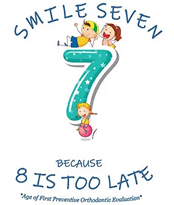
Smile 7 Because 8 is too Late™
After years of treating children, Dr. Cosmo recognized a common pattern—many adolescents were developing orthodontic problems that could have been prevented or simplified with an earlier evaluation.
This insight led to the creation of the Smile 7 Because 8 Is Too Late™ initiative, designed to educate families on the importance of early screening.
Why Age 7?
By age 7, the first permanent molars have usually erupted, establishing the foundation of your child’s bite. This allows for a clear assessment of how the teeth and jaws are developing—while growth is still active and responsive to guidance.
The Smile 7 Difference
The goal isn’t to start treatment for every child—it’s to ensure no child misses the opportunity for early, simple intervention when needed.
To make early care accessible, complimentary evaluations are offered, including convenient virtual options for busy families.
Don’t wait until problems become more complex—early insight makes all the difference.
Schedule a Free Smile 7 Evaluation

Signs Your Child May Need an Orthodontic Evaluation
Orthodontic issues aren’t always obvious. However, certain signs may indicate that it’s time for an evaluation:
- Early or delayed loss of baby teeth
- Difficulty chewing or biting
- Frequent mouth breathing
- Crowded or misaligned teeth
- Jaws that shift, click, or appear uneven
- Bite problems where teeth don’t meet properly
- Prolonged thumb-sucking or pacifier use
- Protruding or noticeably crooked teeth
- Teeth grinding or clenching
If you've noticed any of these signs in your child, an evaluation with Dr. Cosmo can give you clarity and a clear path forward.
Choosing the Right Time for Treatment
While age 7 is the ideal time for a first evaluation, the timing of treatment varies for every child. Careful assessment of growth, tooth development, and bite alignment helps determine the best moment to begin.
Starting treatment at the right time gives your child the best chance to:
- Correct bite issues before they worsen
- Guide proper jaw development
- Create space for incoming permanent teeth
- Reduce the risk of injury to protruding teeth
- Improve facial balance and appearance
- Boost confidence during important developmental years
In many cases, monitoring growth before beginning treatment is the best approach—and having a plan in place ensures nothing is missed.
Start Your Child's Orthodontic Journey With a Free Exam
Whether your child is nearing age 7 or you’ve noticed early signs of concern, getting answers early can make a lasting difference.
A complimentary evaluation provides a clear understanding of your child’s dental development, along with personalized recommendations for monitoring or treatment.
Take the first step toward a healthier, more confident smile.