59 Phenix Ave Cranston, RI 02920

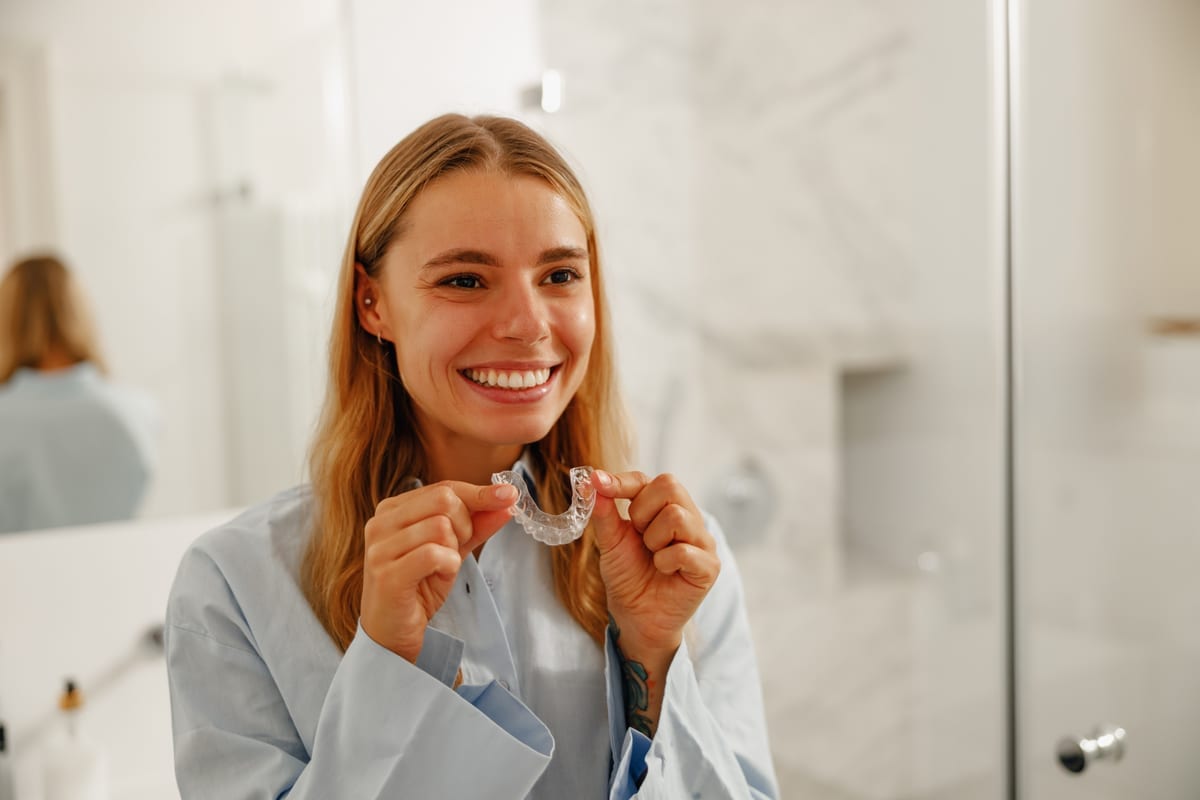
One of the first questions patients ask at Cranston Orthodontics is simple: how long does Invisalign actually take? The honest answer is that it depends — but that does not mean we cannot give you a realistic picture. Dr. Cosmo Haralambidis helps patients in Cranston, RI understand exactly what shapes their Invisalign timeline. Knowing what to expect makes the whole process feel far less overwhelming.
What Is the Average Invisalign Timeline in Cranston?
For most adults and teens, Invisalign treatment runs between 12 and 18 months. That range covers the majority of moderate alignment cases. Some mild cases resolve in as little as six months. More complex bite or spacing issues can stretch closer to 24 months.
Every smile is different, and no two treatment plans are identical. Dr. Haralambidis evaluates each patient individually before estimating a timeline. The goal is always accuracy over optimism. A realistic forecast helps you plan your life around treatment — not the other way around.
Teen patients often follow a similar schedule to adults. If you are exploring options for a younger family member, our Orthodontics For Teens Cranston page covers what to expect in more detail. Younger children with developing jaws may need a different approach altogether, which is why early assessment matters.
Factors That Shorten Your Invisalign Treatment Time
Several factors can actually speed up your progress with Invisalign. Understanding them helps you become an active participant in your own results. The biggest driver of a shorter timeline is compliance — but we will cover that in its own section.
Here are the key factors that tend to shorten treatment:
- Mild to moderate misalignment — Smaller corrections require fewer aligner trays overall
- Younger age — Teeth in younger patients often move more efficiently
- No prior orthodontic relapse — Starting from a relatively stable baseline speeds things up
- Consistent aligner wear — Wearing trays the recommended 20–22 hours daily keeps treatment on track
- Attending all scheduled checkups — Regular monitoring catches small issues before they become delays
Patients who commit fully to their plan often finish close to or even ahead of schedule. The process rewards consistency in a very direct way.
What Extends an Invisalign Timeline — and How to Avoid It
Just as some habits speed up treatment, others slow it down significantly. Being aware of these pitfalls helps you protect your investment of time and effort. Dr. Haralambidis discusses these with every new patient at the start of care.
Common reasons timelines get extended include:
- Removing aligners too often — Even an hour or two of extra removal each day adds up over months
- Skipping or delaying tray changes — Each aligner must do its job fully before you advance to the next
- Missing appointments — Check-in visits allow Dr. Haralambidis to confirm teeth are tracking correctly
- Unexpected tooth movement — Occasionally, teeth do not shift exactly as planned and refinements are needed
- Dental health issues — Cavities or gum problems must be treated before orthodontic progress can continue
Refinements are actually quite common with Invisalign. They are not a sign of failure — they are a normal part of fine-tuning your results. However, they do add weeks or months to the overall timeline.
Patients starting orthodontic care earlier in life sometimes avoid more complex corrections later. Our Orthodontics For Children Cranston service addresses early intervention for that reason. Catching issues young can simplify future treatment significantly.
The Role of Compliance in Your Invisalign Results
No single factor matters more than compliance. Invisalign aligners are removable — and that freedom is a double-edged sword. The system works beautifully when you wear your trays consistently. It stalls when you do not.
Dr. Haralambidis recommends wearing aligners for at least 20 to 22 hours every day. That leaves roughly two to four hours for eating, drinking anything other than water, and brushing. It sounds strict — and it is — but that discipline is what drives results.
Patients who follow this guideline closely rarely experience major delays. Those who slip into habits of frequent removal often find their treatment extends by months. The aligners cannot move teeth they are not touching. It really is that straightforward.
Think of your Invisalign plan as a daily commitment rather than a passive process. The trays do the work — but only when they are in your mouth. Building a consistent routine around meals and oral hygiene makes compliance much easier to maintain long-term.
What Happens After Invisalign Is Complete?
Finishing your final aligner tray is a milestone — but it is not quite the finish line. After active treatment ends, retention begins. Retainers preserve the results Dr. Haralambidis worked hard to achieve with you.
Most patients wear a retainer nightly for the long term. Skipping retainer use allows teeth to drift back toward their original positions over time. That process is called relapse, and it can undo months of treatment progress.
Retention is a small ongoing commitment compared to the work already done. Dr. Haralambidis provides clear guidance on retainer wear at the end of your treatment. Following that guidance protects every result you earned during your Invisalign journey.
Frequently Asked Questions
How long does Invisalign take for mild cases?
Mild alignment corrections in Cranston typically take around six to twelve months with Invisalign. The exact duration depends on how much tooth movement is needed and how consistently you wear your aligners. Dr. Haralambidis will give you a personalized estimate after your initial consultation.
Can I speed up my Invisalign treatment?
The most effective way to stay on schedule — or even finish early — is to wear your aligners for 20 to 22 hours every day. Attending every scheduled appointment also helps Dr. Haralambidis catch any tracking issues quickly. Some patients use AcceleDent or similar adjuncts, which we can discuss during your visit.
What happens if I do not wear my aligners enough?
Insufficient wear time means your teeth are not receiving consistent pressure to move. This can cause your teeth to stop tracking with the aligner shape, which often requires additional refinement trays. Extended noncompliance can add months to your total treatment timeline.
Is Invisalign treatment the same length for teens as for adults?
Teen treatment timelines are generally similar to adult timelines, ranging from 12 to 18 months for most cases. However, younger patients whose jaws are still developing may have different orthodontic needs. Dr. Haralambidis tailors every plan to the individual patient’s age and dental situation.
Do I need a retainer after Invisalign finishes?
Yes — retainers are an essential part of protecting your results after active Invisalign treatment ends. Without a retainer, teeth naturally shift back toward their original positions over time. Dr. Haralambidis provides detailed retainer instructions at the conclusion of every Invisalign case.
Understanding your Invisalign timeline takes the guesswork out of the process. Dr. Cosmo Haralambidis and the team at Cranston Orthodontics are here to walk you through every stage — from your first consultation through the day you finish your final tray. Book Now to schedule your appointment with our team.